The retail glass packaging market is entering a decade of consistent growth and transformation. As consumer preferences shift toward premium, recyclable, and visually appealing packaging formats, glass continues to solidify its role as one of the most trusted materials across beverage, food, and specialty product industries.
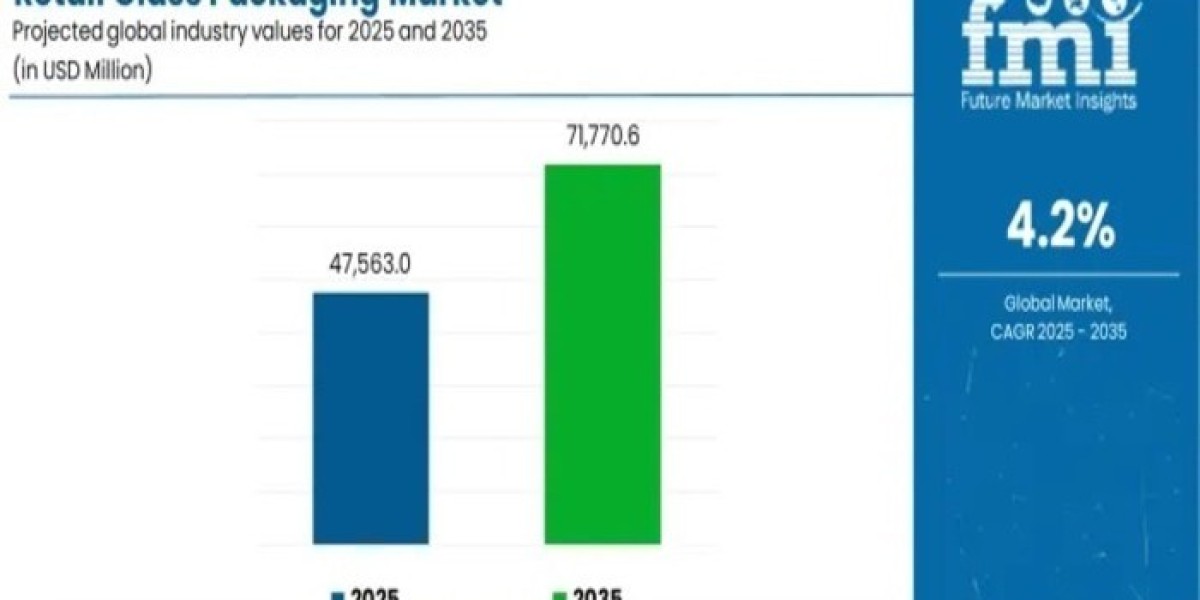
According to market projections, the retail glass packaging market is expected to rise from USD 47,563 million in 2025 to USD 71,770.6 million by 2035, growing at a 4.2% CAGR. This expansion reflects the combined impact of craft beverage growth, premium product positioning, and rising sustainability expectations worldwide.
Subscribe for Year-Round Insights → Stay ahead with quarterly and annual data updates – https://www.futuremarketinsights.com/reports/sample/rep-gb-4440
Meaning of Retail Glass Packaging
Retail glass packaging refers to glass-based containers—mainly bottles, jars, and vials—designed specifically for retail-facing products like beverages, food items, cosmetics, pharmaceuticals, and personal care goods. Glass is prized for its transparency, chemical inertness, superior barrier properties, and long-standing reputation as a premium and sustainable packaging material.
Market Overview: A Premium Material in High Demand
In 2025, bottles alone are expected to command 62% of the total market, owing to their essential role in alcoholic and non-alcoholic beverage packaging. Glass bottles preserve aroma, flavor, and carbonation like no other material, making them indispensable for premium spirits, craft beers, boutique wines, and artisanal soft drink categories.
The food and beverage sector, holding 54% of the total applications, remains the primary growth engine. From specialty sauces and preserves to sparkling wines and spirits, glass remains the top choice for brands that prioritize quality and authenticity.
Regionally, Asia Pacific leads global growth, particularly driven by consumer expansion in China (5.8% CAGR) and India (5.3% CAGR). Meanwhile, mature markets like the US, Germany, and France continue to show steady, premium-driven growth backed by strong beverage heritage and brand innovation.
Market Outlook: 2025–2035
The next decade will see distinct evolutionary phases in the retail glass packaging industry:
2025–2030: Premium Adoption and Technology Integration
Market value will rise from USD 47,563 million to USD 58,247 million, representing 44% of the decade’s total expansion.
During this period, brands will increasingly shift from standard glass containers to advanced, decorated, and lightweight formats. Established players like Owens-Illinois Inc., Ardagh Group, and Verallia will expand portfolios, while new entrants will focus on custom-designed, aesthetic-driven packaging.
2030–2035: Customization and Smart Packaging
By 2035, the market will reach USD 71,892 million, with advanced customization, e-commerce-friendly designs, and multi-format systems becoming mainstream. NFC tags, QR-based authentication, and enhanced decoration techniques will differentiate brands in competitive retail environments.
Demand Drivers: Why the Market Is Growing
Three key forces are shaping long-term demand:
- Premium Product Positioning: Glass packaging immediately signals quality. Transparent visibility, unique shapes, and luxurious textures help brands justify premium pricing.
- Craft Beverage Boom: Craft breweries, boutique wineries, and artisanal spirit makers rely heavily on distinctive glass bottles that elevate brand storytelling and reflect heritage authenticity.
- Consumer Preference for Safety & Sustainability: Consumers trust glass for its non-reactive composition, recyclability, and ability to preserve product integrity without chemical migration.
Market Trends Shaping the Future
- Lightweight Glass Technology: Manufacturers are shifting toward thinner yet durable glass that reduces transportation costs and carbon footprints.
- Smart & Interactive Packaging: Integration of QR codes, NFC chips, and scannable labels enables traceability and consumer engagement.
- Circular Economy Initiatives: Returnable bottle programs, closed-loop recycling, and urban collection centers are transforming the sustainability landscape.
- Aesthetic Innovation: Frosting, embossing, screen printing, and colored glass continue to drive differentiation across premium food and beverage segments.
Competitive Landscape
The market includes global leaders and emerging innovators. Major players include:
- Owens-Illinois Inc.
- Ardagh Group S.A.
- Verallia
- Gerresheimer AG
- Vidrala S.A.
- Vetropack Holding Ltd
- Piramal Glass Limited
- Bormioli Rocco S.p.A.
- Consol Glass (Pty) Ltd
- Nihon Yamamura Glass Co., Ltd.
These companies are doubling down on lightweighting, design flexibility, sustainable operations, and high-precision manufacturing.
Growth Opportunities Ahead
Key opportunity pathways for market participants include:
- Premium craft beverage packaging innovations
- Geographic expansion in emerging markets (APAC & LATAM)
- Advanced lightweight manufacturing technologies
- High-end wine and spirits bottle customization
- Pharmaceutical-grade amber glass for safety and compliance
- Decorative and value-added packaging techniques
With rising disposable incomes and evolving lifestyle preferences, demand for premium packaging will continue accelerating through 2035.
Why FMI: https://www.futuremarketinsights.com/why-fmi
About Future Market Insights (FMI)
Future Market Insights, Inc. (FMI) is an ESOMAR-certified, ISO 9001:2015 market research and consulting organization, trusted by Fortune 500 clients and global enterprises. With operations in the U.S., UK, India, and Dubai, FMI provides data-backed insights and strategic intelligence across 30+ industries and 1200 markets worldwide.