
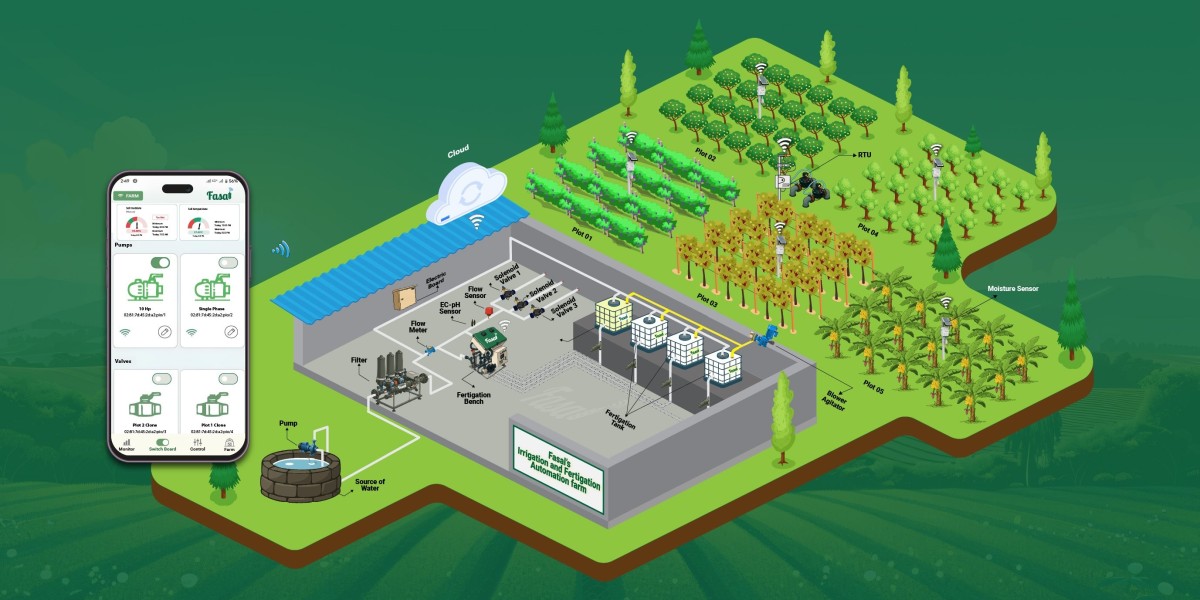
In farming, applying fertilizers is only half the job. The real challenge lies in ensuring that nutrients actually reach the root zone where plants can absorb them. Traditional fertilizer application methods often lead to nutrient loss through leaching, runoff, or uneven distribution. This is where a fertigation system plays a transformative role.
By delivering nutrients directly through irrigation water, a fertigation system ensures precise, efficient, and timely nutrient availability at the root zone.
Understanding Nutrient Availability in the Soil
Soil acts as a reservoir for nutrients, but not all nutrients present in the soil are available to plants. Factors such as moisture levels, soil texture, pH, and root activity determine how effectively crops absorb nutrients.
A fertigation system works in sync with these factors, creating optimal conditions for nutrient uptake rather than relying on surface application alone.
How a Fertigation System Transports Nutrients to the Root Zone
1. Targeted Nutrient Delivery
Unlike broadcasting fertilizers across the field, a fertigation system delivers nutrients directly to the active root zone through drip or micro-irrigation. This targeted approach ensures:
- Uniform nutrient distribution
- Minimal nutrient loss
- Better root absorption efficiency
2. Improved Nutrient Solubility and Mobility
Nutrients delivered via a fertigation system are dissolved in water, making them readily available for plant uptake. This improves nutrient mobility in the soil, allowing roots to access nutrients more easily and consistently.
3. Maintaining Optimal Soil Moisture
Proper soil moisture is critical for nutrient absorption. A fertigation system maintains ideal moisture levels around the root zone, preventing both water stress and nutrient lock-up caused by dry or overly saturated soil.
Enhancing Root Zone Efficiency with a Fertigation System
1. Reduced Leaching and Runoff
Conventional fertilizer methods often lead to excess nutrients moving beyond the root zone. A fertigation system applies nutrients in small, controlled doses, significantly reducing leaching and runoff.
2. Better pH and EC Management
Advanced fertigation systems allow farmers to monitor and adjust pH and electrical conductivity (EC), ensuring nutrients remain in plant-available forms. This is particularly effective in managing micro-nutrient availability.
3. Stage-Wise Nutrient Application
Different growth stages demand different nutrients. A fertigation system enables stage-wise nutrient application—supporting root development, vegetative growth, flowering, and fruiting with precision.
The Role of Smart Fertigation in Modern Farming
At Fasal, the fertigation system is enhanced with real-time farm data, weather insights, and crop intelligence. This integration helps farmers:
- Align nutrient application with crop demand
- Avoid over-fertilization
- Improve fertilizer use efficiency
By combining irrigation, nutrition, and data-driven recommendations, farmers gain full control over nutrient flow from soil to root zone.
Benefits of Improved Nutrient Availability
Using a fertigation system to optimize nutrient availability results in:
- Stronger root systems
- Healthier plant growth
- Higher yields and better produce quality
- Reduced fertilizer costs
- Environmentally sustainable farming practices
Why Nutrient Precision Matters Today
With rising input costs and increasing climate variability, nutrient efficiency has become more important than ever. A fertigation system empowers farmers to make every drop of water and every gram of fertilizer count.
Conclusion
The journey of nutrients from soil to root zone determines the success of any crop. A modern fertigation system ensures that this journey is efficient, precise, and aligned with crop needs. By improving nutrient availability exactly where it matters most, fertigation systems are redefining how farmers nourish their crops.
For farmers using Fasal’s intelligent solutions, fertigation becomes not just a method—but a strategy for sustainable and profitable farming.